United States
 Canada
 Mexico
 Colombia
 El Salvador
 South Africa
 Jamaica
 Philippines
 India
India Egypt
Egypt Greece

 Read
ReadWhen a patient leaves a clinic unsatisfied, it rarely happens inside the exam room. According to Press Ganey, the common drivers of poor patient experience scores are long hold times, and unresolved scheduling issues. It highlights the problems rooted not in clinical care, but in administrative support infrastructure.
More in this Blog
Healthcare providers today face a choice between legacy call center model built for volume or adopt a concierge patient support model built for experience. These two approaches differ not in process, but in staffing, technology, and CX outcomes.
This guide breaks down both models and gives you the data you need to decide which fits your practice in 2026.
What is Legacy Healthcare Call Center?
A legacy healthcare call center is a centralized hub that manages volume-driven patient communication. Its primary function is to handle inbound patient calls across operations like:
- Appointment scheduling
- Prescription refills
- Billing inquiries
- General inquiries
- Follow-ups and more
Core characteristics of the legacy call center model includes:
- Agent performance is measured primarily on average handle time (AHT) and call volume.
- Scripted, linear workflows with limited authority to resolve complex issues.
- Single-channel or limited dual-channel (phone + chat) access.
- High agent turnover, often exceeding the industry average of 30 – 45%.
The legacy call center model was built for an era when healthcare was transactional. That’s why it’s cost-optimized, not experience-optimized.
What is Concierge Support for Healthcare Providers?
Concierge support in healthcare is a relationship-driven patient engagement model in which a dedicated patient support team acts as an extension of the clinical care team. Such teams handle everything from pre-visit coordination and insurance navigation to post-discharge follow-up and care gap closures.
Here are the key functions of concierge patient support partner:
- Proactive outreach for appointment reminders, lab result follow-up, and care plan adherence.
- End-to-end care navigation across healthcare providers, payers, and medical facilities.
- Personalized communication through omnichannel concierge healthcare support, unifying phone, SMS, email, patient portal, and chat.
- Post-discharge check-ins to reduce preventable readmissions.
- Bedside and discharge coordination to free clinical staff for direct care.
Unlike legacy call centers, concierge patient services focus on care continuity. It means the same team member manages the full patient journey, not just random interactions assigned to them.
Future-Proof Your Patient Experience Strategy

Head-to-Head Comparison – Concierge Support vs Legacy Call Center
Here is the difference between legacy call centers and outsourced concierge patient support.
| Feature | Legacy Call Center | Concierge Patient Support |
|---|---|---|
| Primary Goal | Handle call volume efficiently | Improve patient outcomes and loyalty |
| Staffing Model | Large, shared agent pool | Dedicated pods assigned per patient/practice |
| Channel Support | Phone, chat, and email (any one channel or a combination of two) | Omnichannel (unifies phone, SMS, email, chat, and patient portal) |
| Proactivity | Reactive (inbound only) | Proactive (inbound + outbound) |
| Care Coordination | Not included | Core function (includes pre- and post-visit navigation) |
| Agent Training | Scripted workflows | AI-simulated training focused on clinical context and patient advocacy skills |
| Performance Metrics | AHT, call volumes, abandonment rate | HCAHPS score, no-show rate, readmission rate |
| Patient Continuity | New agent for each call | Same team throughout the patient journey |
| Integration with EHR | Limited | Deep EHR and care plan integration |
| Outsourcing Viability | Widely available | Emerging through white-glove patient support outsourcing |
| Cost Structure | Lower upfront cost, higher turnover cost | Higher per-patient investment with higher ROI potential |
Give Your Clinical Teams More Time to Care
5 Key Difference That Directly Impact Patient Experience
1: Personalization Over Scripts
Legacy call centers operate on linear decision trees. When a patient calls with a complex issue, such as navigating a denied insurance claim while also trying to reschedule a specialist referral.
In this scenario, the scripted model creates friction at every step. But concierge patient navigation services are staffed with agents trained to hold context across interactions and escalate intelligently.
According to a study published by PubMed Central, personalization in non-clinical interaction is a strong aspect, leading patients to recommend their provider.
2: Proactive Communication Reduces No-Shows
Healthcare appointment no-show rate ranges from 5% to 40% across specialists, with higher rates in primary care and behavioral health. Legacy call centers send automated reminders but don’t follow up on non-responses or engage patients who are at risk for disengagement.
A dedicated patient concierge team contacts patients 48 – 72 hours before appointments. Also, it confirms transportation needs, addresses concern proactively, and flags high-risk no-show profile to care coordinators. As a result, it reduces the no-show burden.
How concierge support reduces patient no-shows:
- Through personalized reminder calls from known team members, instead of robot calls.
- By identifying and resolving issues related to transportation, childcare, and cost concerns.
- By rescheduling authority on the same day without holding queues.
- By executing post-no-show re-engagement within 24 hours.
3: Post-Discharge Follow-Up Cuts Readmissions
The CMS Hospital Readmission Reduction Program (HRRP) penalizes hospitals for excess 30-day readmissions.
The Concierge model offers post-discharge support, which check-in calls at 24 hours, 72 hours, and 7 days post-discharge. It’s a protocol that significantly reduces preventable readmissions.
Whereas legacy call centers do not typically include post-discharge care coordination within their standard scope of work.
4: Omnichannel Access vs Phone-Only
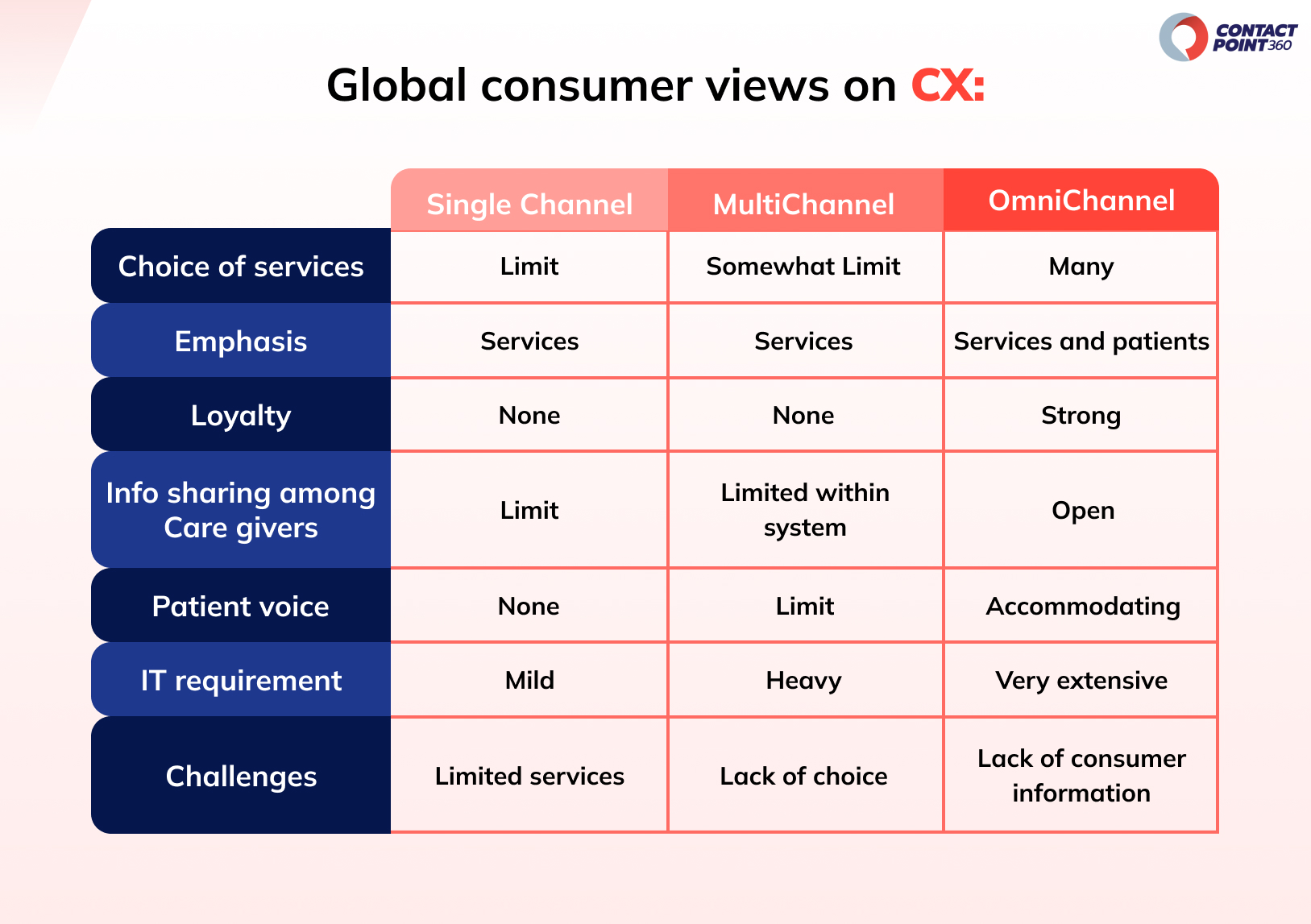
Multiple healthcare-oriented journals and reports found that patients prefer digital touchpoints, such as SMS, apps, and patient portals for non-urgent healthcare communication. Yet, most legacy call centers remain primarily phone-centric or single/multichannel.
Omnichannel concierge healthcare support meets patients where they are, reducing the inbound call volume of the providers while improving patient satisfaction scores.
5: Staff Retention and Care Quality
As per 2023 NSI Health Care Retention Report, administrative healthcare staff turnover averages 22.5% annually with a cost averaging USD 10,452 per employee. High turnover in legacy call centers creates service inconsistency, as patients explain their situation repeatedly to new agents, which erodes trust.
Outsourced concierge patient support offers a dedicated partner that stabilizes this entirely. The provider retains none of the turnover cost or management overhead. And patients interact with trained, consistent team members who understand the patient’s concern and provider’s protocols.
Partner With Experts in Healthcare Concierge Support
The ROI Case – Concierge Care Coordination Outsourcing
When providers evaluate concierge care coordination outsourcing ROI, three financial drivers dominate:
1: Reduced no-shows: Each avoided no-show protects an average of USD 200 – 300 in revenue per appointment. And if it’s a specialized care case, the amount can increase to USD 600.
2: Lower readmission penalties: Concierge-driven post-discharge support helps in reducing Medicare reimbursements in accordance with policies listed in CMS HRRP.
3: HCAHPS score improvements: Higher HCAHPS scores affect value-based purchasing adjustments under CMS, with top-performing hospitals receiving meaningful payment bonuses.
These points clearly indicate that concierge support delivers ROI. The only question to figure out is whether to build it in-house or leverage a white-glove patient support outsourcing partner.
How Can Healthcare Providers Outsource Concierge Patient Services?
In 2026, outsourced concierge patient support is the preferred model. It allows practices of all sizes to offer a dedicated patient concierge experience without hiring, training, or managing an additional team.
Here’s how you can add concierge support to your healthcare practice via outsourcing:
1: Identify the patient journey gaps that are costing you satisfaction scores and revenue. Focus on metrics like no-shows, post-discharge, and scheduling complexity.
2: Define the scope, such as pre-visit, per-visit, or post-discharge, or all three.
3: Start evaluating healthcare BPO providers with their EHR integration, HIPAA compliance, and clinical context training.
4: Select a CX service provider and pilot with a defined patient cohort for 60 – 90 days.
5: Measure against HCAHPS, no-show rate, and readmission rate baseline. If the CX provider delivers satisfactory results, continue with them.
Always remember that one billing cycle is enough for a reliable concierge patient support partner to start delivering results.
Let’s Build a Better Patient Experience Together
Conclusion – Which Model is Right for Your Practice?
The competition between concierge support for healthcare providers and the legacy call center is not really a fair fight. One focuses on volume, while the other is relationship oriented. And this provides you with a clear path to choose among them.
Choose a legacy call center model if:
- Your primary need is high-volume, low-complexity inbound call management.
- Your patient population has straightforward scheduling and billing needs.
- You have budget constraints that make per-patient concierge investment unfeasible in the short-term.
Choose a concierge patient support model if:
- You serve a chronically ill, elderly, or complex care population.
- Your no-show rates or readmission rates above benchmark.
- HCAHPS scores are affecting your value-based care reimbursements.
- Your clinical staff are spending time on administrative coordination that should be delegated.
- You want a scalable patient experience advantage without adding headcount.
FAQs
Can mid-size healthcare practices afford concierge patient support?
How does concierge support reduce patient no-show rates specifically?
What metrics should providers track to evaluate a concierge patient support partner?
Providers should track the following KPIs while evaluating concierge patient support partner:
- HCAHPS communication
- Responsiveness
- 30-day no-show rate before and after onboarding
- 30-day all-cause readmission rate
- Average time-to-resolution
- Patient satisfaction score
- Net promoter score (NPS)